Recently, in-depth media coverage concerning the demolition and expropriation of historically managed properties and policy-rented legacy houses in Beijing has drawn widespread public attention. Many courtyard residences located in urban core areas, inherited from previous generations, were placed under government housing authority management and public leasing arrangements due to special historical policies. Although lawful ancestral property deeds remain valid, original titleholders are often unable to repossess their houses. Once urban renewal and expropriation projects commence, competent authorities frequently refuse compensation on the grounds that such houses “have been nationalized”, leaving numerous property owners trapped in long-term unresolved disputes with no access to legitimate demolition compensation. Drawing on decades of administrative dispute practice experience, Wang Youyin, Founding Lawyer of Beijing Sheng Yun Law Firm, provides professional interpretation of legal rights protection strategies for expropriation involving historically retained legacy properties.
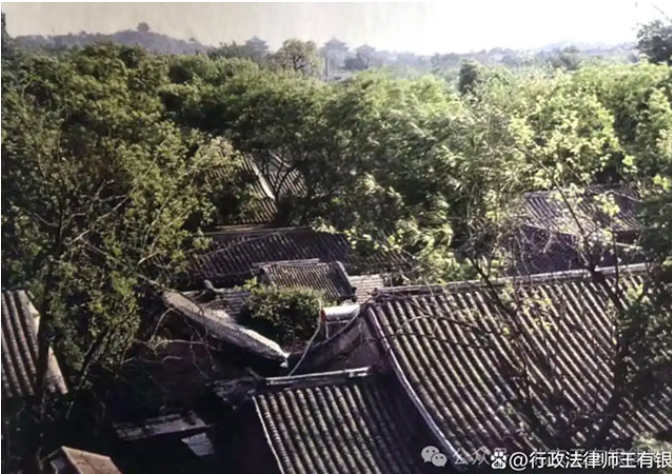
Demolition Case & Hot Issue Review: Institutional Dilemmas of Historically Managed and Policy-Leased Properties
According to public reports, a courtyard residence purchased during the Republic of China era in a Beijing district was placed under government trusteeship as ownerless property after the original titleholder departed for Taiwan on the eve of the founding of the People’s Republic of China. Although subsequent policy implementation confirmed the legal title status of the owner’s family members, the property was never vacated or returned. The heirs petitioned multiple government departments including the United Front Work Department, housing administration bureau and land and resources bureau for over a decade and filed successive administrative litigations, all of which were dismissed. They were ultimately caught in a dilemma: title confirmed yet property unreturned, demolition encountered yet no compensation granted.
Such disputes are far from isolated. Statistics indicate that tens of thousands of similar historically managed and policy-leased legacy properties exist in Beijing alone. Mostly located in prime urban areas with high market value, these houses feature complicated title evolution spanning multiple historical policy adjustments. Many holders of Republic of China-era property deeds and early PRC real estate certificates fall into passive positions during expropriation due to insufficient understanding of policy changes, resulting in inadequate protection of legitimate property rights.
Lawyer Wang Youyin points out that managed and policy-leased properties are products of specific historical stages. Policy documents issued in different periods vary in provisions concerning title ownership, property restitution and expropriation compensation. A blanket rule of “total nationalization” cannot be arbitrarily applied. With the large-scale advancement of urban renewal and old-town renovation, numerous legacy properties have been included in expropriation scopes, and the lawful compensation rights of original titleholders deserve full legal protection.
In-Depth Legal Analysis: Four Core Legal Issues in Legacy Property Expropriation
1. Legal Validity Boundaries of Historical Title Documents
Article 217 of the Civil Code of the People’s Republic of China stipulates that real estate title certificates serve as legal proof of real estate ownership. Early PRC real estate ownership certificates and Republic of China-era property deeds are critical evidence verifying historical title evolution. Though not equivalent to current standard real estate certificates, they constitute core proof of original property ownership and legitimate title sources.
Lawyer Wang Youyin emphasizes that legitimate title rights cannot be denied simply on the grounds that “old certificates are invalid”. For policy-leased and government-managed legacy properties, authorities must distinguish the legal nature of trusteeship, policy leasing and legal confiscation by referring to phased historical policies. Trusteeship essentially means administrative management without title transfer; policy-leased properties require comprehensive judgment on the legality of title changes based on specific policy documents; only properties legally confiscated through statutory procedures are validly nationalized.
2. Qualification Recognition of Compensation Subjects in Expropriation
Many local expropriation authorities argue that properties under long-term public management qualify as public housing, and compensation should be issued to housing administrative departments rather than original owners. Lawyer Wang Youyin clarifies that the confirmation of compensation beneficiaries depends on legal title ownership rather than actual occupancy status.
Article 2 of the Regulations on the Expropriation and Compensation of Houses on State-owned Land prescribes that fair compensation shall be granted to property owners for expropriation conducted in the public interest. If no legal title transfer has occurred, original owners or their lawful heirs remain qualified expropriation beneficiaries entitled to full compensation. Long-term occupation by third parties shall not deprive titleholders of statutory compensation rights.
3. Legal Boundaries of Refusing Compensation Based on “Historical Trusteeship”
In practice, many housing authorities refuse compensation to original owners by claiming that managed legacy properties have been nationalized under historical policies, yet fail to produce valid legal documents proving legitimate title conversion. Lawyer Wang Youyin stresses that administrative authorities bear the burden of proof for nationalization claims. Formal approval documents and title registration change materials compliant with corresponding historical policies must be provided.
Pure factual trusteeship without legal nationalization procedures, official approval or title transfer records cannot constitute valid state-owned asset recognition, nor can it legally deprive original owners of expropriation compensation rights.
4. Statutory Remedy Paths for Rights Protection
Legacy property disputes involve complex policy evolution, making direct title confirmation litigation extremely difficult. Based on practical experience, Lawyer Wang Youyin recommends a phased and hierarchical remedy strategy. First, conduct full government information disclosure to obtain complete historical property archives, clarifying the nature of trusteeship or policy leasing and all historical policy adjustment records. Second, claim compensation rights targeting formal expropriation acts and resolve substantive title issues through expropriation dispute procedures. Third, apply for private housing policy implementation where applicable before advancing compensation claims.
Practical Rights Protection Suggestions by Lawyer Wang Youyin
1. Establish a Complete Chain of Title Evidence
Relying solely on individual old deeds is insufficient for effective rights protection. Collect comprehensive supporting materials including ancestral inheritance proof, household registration records, historical correspondence with housing authorities and official policy response documents to form a complete evidentiary chain proving legitimate title inheritance and continuous ownership.
2. Initiate Full Government Information Disclosure
File official information disclosure applications with district housing administration and natural resource bureaus to obtain complete property files, including trusteeship approval documents, policy leasing procedures, historical title change records and current expropriation compensation plans. Clarify the full policy background of the property to avoid blind rights protection actions.
3. Select Classified Remedy Paths According to Case Progress
For properties still in the policy implementation stage, prioritize official policy restitution applications with competent housing policy departments. For properties already included in formal expropriation procedures, directly assert compensation rights through administrative reconsideration and litigation to resolve disputes efficiently, avoiding lengthy and ineffective petition cycles.
4. Seize the Optimal Window of Expropriation Negotiation
The expropriation stage is the best opportunity to resolve legacy property disputes. Expropriation projects feature fixed timetables and budget arrangements. Stabilizing compensation rights through standardized legal procedures delivers far more substantive results than passive long-term petitions.
Professional Reminder
Due to complex historical origins and strong policy attributes, the handling of managed and policy-leased legacy property cases varies significantly based on specific policy evolution and evidentiary completeness. No unified settlement standard applies. Parties involved in such disputes are advised to consult professional administrative lawyers at an early stage to formulate hierarchical, targeted rights protection strategies and avoid missed legal opportunities caused by incorrect remedy paths.
Legal Consultation Hotlines of Beijing Sheng Yun Law Firm: 010-6190-8088, 400-159-8098, 138-1111-7637


 English
 Chinese